The logistical labyrinth: shipping live organ-on-a-chip systems and organoids
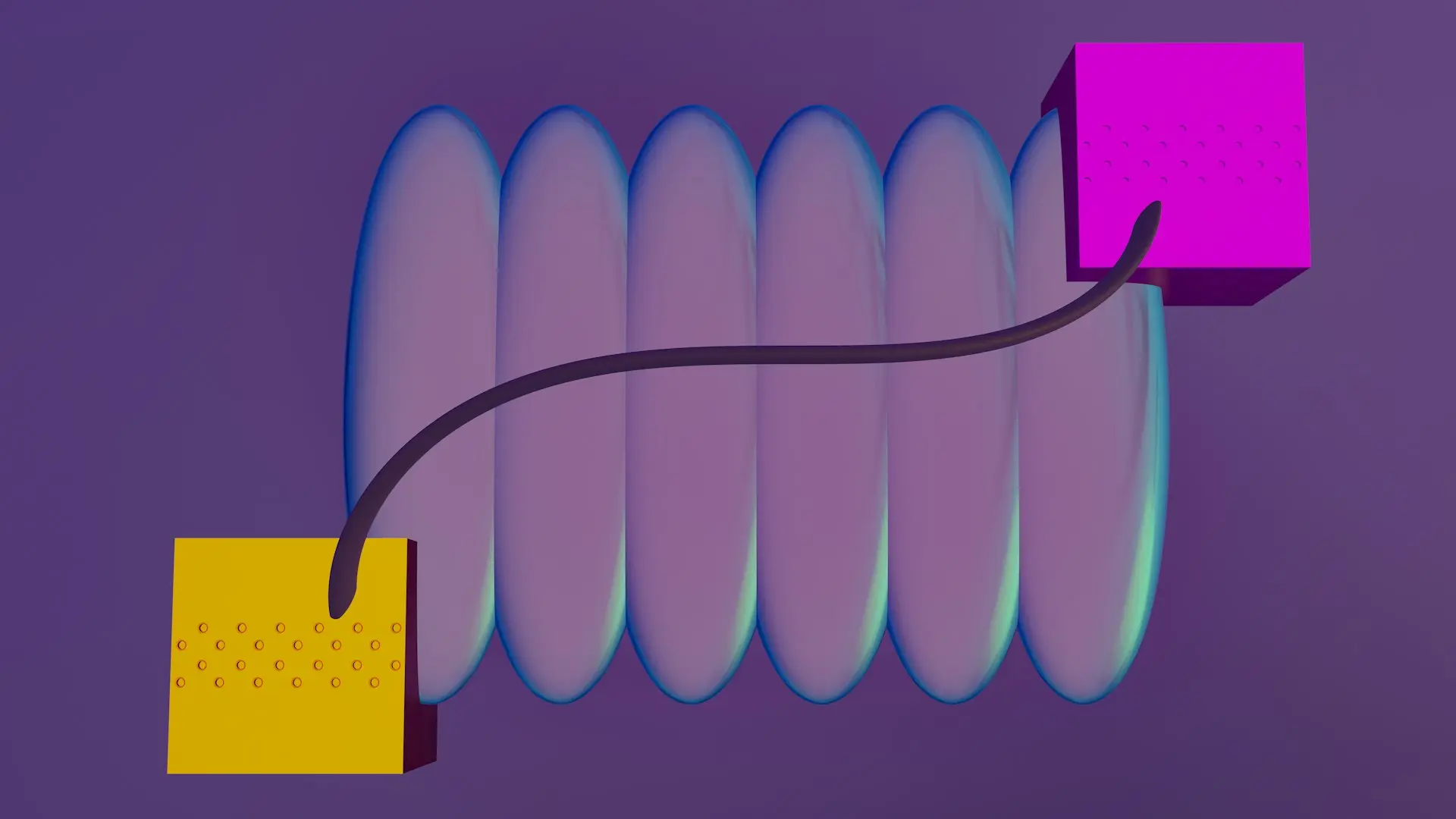
Organ-on-a-chip (OoC) technology and 3D organoids promise to revolutionize drug discovery and disease modeling by providing more human-specific data than traditional animal models. However, realizing this potential requires collaboration and material sharing across laboratories. While some institutions excel at engineering these systems, others provide biological discovery, analysis, or clinical pharmacology expertise.
A critical challenge often overlooked: transporting live, functional chips and delicate organoids between labs while preventing contamination and ensuring tissue viability.
The contamination minefield
Contamination poses exponential risks in OoC and 3D organoid work:
- Organ-on-a-chip systems: the complexity of pumps, microfluidic channels, tubing, and media reservoirs creates multiple potential contamination entry points. Manual handling during packaging and transit substantially increases microbial exposure risk compared to static cultures.
- 3D organoids: though maintained in static plates, organoids are highly environment-sensitive. Preparing them for transit while maintaining sterile, sealed conditions proves difficult, and any aseptic-technique breach compromises entire batches.
A single contamination event destroys experiments, wastes resources, and valuable human cells.
The logistical nightmare
| Challenge | Issue |
|---|---|
| Portability issues | OoC systems and organoid cultures require specialty plates and carriers to prevent evaporation. Microfluidic ports and miniature chambers demand careful pre-transportation management. |
| Incompatible with cryo-freezing | Most OoC systems and 3D organoids cannot be cryo-frozen for transport. Complex 3D designs prevent rapid internal freezing, and freeze-thaw cycles destroy cell viability and system function. |
| Extreme physiological dependence | Live cells require constant nutrient supply, oxygenation, pH control, humidity, and precise temperature regulation. Shipping delays, temperature fluctuations, or gas-condition loss cause cell death. Retinal organoids are particularly vulnerable to temperature changes affecting biological activity and structural integrity. |
| Operational complexity | Operating these systems requires specialized expertise. Receiving labs may lack specific equipment or protocol knowledge developed elsewhere. Transport-timing coordination involves multiple human-error failure points. |
| Movement sensitivity | Many systems are movement-sensitive, particularly neural organoids that continually sense environmental changes. Standard styrofoam transport boxes lacking vibration-minimization design can damage systems or alter biological function. |
Towards a solution
Addressing these challenges enables wider adoption of OoC and 3D-organoid technology in multi-center studies and pharmaceutical pipelines:
- Standardized protocols — developing and adopting standardized creation and handling protocols ensures consistency between labs and eases transition processes.
- User-friendly designs — more robust, user-friendly platforms reduce operational complexity and handling errors, cutting contamination risks.
- Digital-technology integration — remote real-time monitoring of physiological conditions (including temperature, humidity, gas concentrations, and orientation) allows source and destination labs to track materials and coordinate transfers. Alerts warn parties when environmental thresholds are breached.
- Commercial solutions — new biotechnology companies provide solutions including optimized shipping media, climate-controlled containers, and commercialized platforms easier to integrate into existing workflows. 37degrees, Inc. is a pioneer in this field, bringing to users a first-of-kind fully native-environment-controlled portable incubator — CultureON 100 — with seamless digital connectivity.
Overcoming logistical and contamination challenges expands collaborative OoC and 3D-organoid research potential. Technical collaborators can focus on designing innovative bio-physical systems while biological and pharmaceutical partners access living materials. Solutions like CultureON 100 provide robust, trustworthy transport pods enabling collaborations across nearby or distant locations.